What and Why?
While the events are still recent...
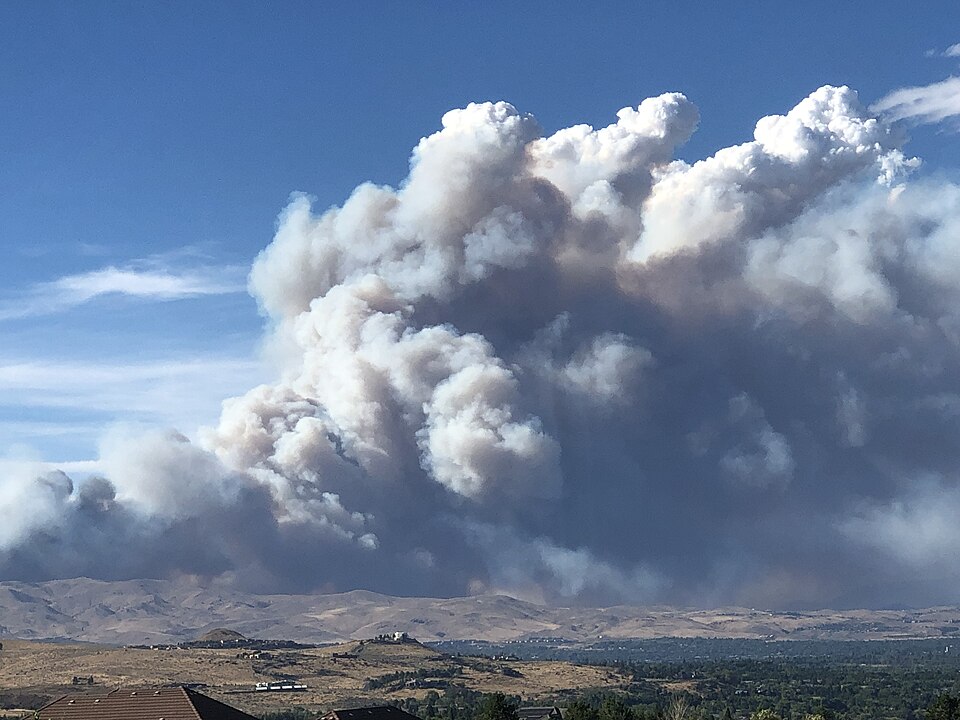

A few weeks ago, the Hawk Fire burned Peavine Mountain in Reno. Tens of thousands were evacuated, lost power, endured intense concern about their homes, their pets, their families. More were indirectly affected. The best part of a thousand personnel were part of the suppression effort (and sincerely, thank you to each and every one of them). Tragically, one person lost their life, and five others were injured.
A few weeks before that, some of the same communities were threatened by the Bug Fire. Bug burned 93,000 acres, and 9 structures were destroyed.
Neither of these fires threatened me directly, but they directly threatened friends and family. Those were anxious weeks.
Fires are an increasingly common part of life here in the arid Western US.
The information gap, and the walled garden
During these fires, information was scarce. WatchDuty (+1 for the app, but also there's web) and Perimeter Map1 (both of which are excellent) were my primary source for information. Daily(ish) briefings from Incident Command filled some gaps but were generally officially published on Facebook (I don't have Facebook) and later summarized on WatchDuty. Even the Reno subreddit often had timelier, more accurate, more specific news than The News (often, but not always).
This all concerns me. The official information channels are hosted on closed platforms, and the messaging appears not to be designed with any accessibility affordances in mind. Are all communities in Reno as aware of WatchDuty as I am? Likely not. And what if you don't know how to install apps? Or if you don't even have a smartphone?
Is Louder Better?
When we moved to Colorado, it didn't take us long to hear the tornado sirens. I'm sure everyone knows what it means when you hear that awful noise. Now we're back in Reno. Fire evacuations have a different pace, require different actions, and occur on very different (smaller) geographic scales. As effective as a tornado siren would be in wildfire scenarios, they would be an effective way to increase panic -- the last thing emergency responders need to deal with.
So, the seed of this project is the idea that perhaps a mesh of devices could be used to disseminate evacuation warnings or evactuation orders. The devices could be personal "tornado sirens" -- with GPS, devices know where they are. A mesh could broadcast the current evacuation zones. And each leaf node in the mesh could emit an audible, accessible warning beacon if it learned it was in harm's way.
Will more tech really make this better?
There's plenty of challenges here. What is "accessible" if you want to include the elderly, or those with hearing or visual disabilities, or those who don't understand English? How can a technical solution be delivered to less wealthy communities at low (or no) cost? How does this mesh scale at a city scale, and deliver critical messages reliably? And how is trust in the message established (both technically, and human-ly)?
Acknowledging...
I have a hidden superpower on this subject: this all is the area in which my partner works. She's taught me the value in cross-disciplinary thinking. From her I have learned a lot about fires, and communities, and people. And really, at the end of the day, people, pets, our communities, our local "natural" environment, and our ecosystem are a lot more important than "playing radio".
--
More to come. If you are in an area that may experience wildfires and you aren't aware of both of these, stop reading my post and bookmark them instead. ↩